
In today’s creator economy, visibility is king—but not everyone wants to show their face on camera.
Enter Faceless.video, an AI-powered content creation platform designed specifically for those who want to build a brand, grow on YouTube Shorts or TikTok, and even earn income without appearing on camera.
But does it deliver on its promise of fast, reliable, and automated faceless content?
This comprehensive review explores everything you need to know: from what Faceless.video is, to its features, pricing, comparisons with competitors, use cases, limitations, and a final verdict based on expert analysis.
Faceless.video is an AI-powered platform that automates the creation of short-form videos (typically under 60 seconds) without needing you to appear on camera.
It was created by Jacob and Alex, two entrepreneurs who realized there was a massive demand for high-quality faceless videos for YouTube Shorts, Instagram Reels, and TikTok—especially as the demand for “passive” income content creation continues to grow.
The platform generates videos using artificial intelligence by taking your chosen topic and turning it into:
You can also connect your YouTube or TikTok accounts so the platform can auto-post for you.
| Plan | Price (Monthly) | Video Volume | Features |
|---|---|---|---|
| Starter | $15 | 3 videos/week | Basic automation, TikTok support |
| Daily Creator | $30 | 1 video/day | Auto-posting, script customization |
| Pro Poster | $45 | 2 videos/day | Dual platform support (TikTok + YouTube), analytics |
| Business/Agency | Custom Pricing | Unlimited | Bulk video creation, branded templates, white-labeling |
Note: All plans offer a free trial but require credit card information. Cancellations must be done before the trial ends to avoid charges.
| Feature | Faceless.video | AutoShorts.ai | Nullface.ai | InVideo AI |
|---|---|---|---|---|
| Auto Scriptwriting | ✅ | ✅ | ✅ | ✅ |
| Auto Voiceover | ✅ | ✅ | ✅ | ✅ |
| Auto Visual Matching | ✅ | ✅ | ✅ | ❌ (Manual) |
| Auto Posting | ✅ | ❌ | ❌ | ❌ |
| Multi-language Support | ❌ | ✅ | ✅ | ✅ |
| Custom Avatars | ❌ | ❌ | ✅ | ❌ |
| Full AI Automation | ✅ | ❌ | ⚠️ Partial | ⚠️ Partial |
| Entry-Level Cost | $15 | $19 | $13.99 | Free/$15+ |
✅ Yes, for automation-driven creators.
❌ No, for creators who need deep editing control or unique branding styles.
Faceless.video is best suited for creators who want to automate their content production pipeline and rapidly grow on short-form platforms. While it doesn’t match the visual fidelity of tools like RunwayML or Pictory, it wins on simplicity, speed, and automation.
If you’re just starting out and want a low-friction path to consistency, this tool might be your secret weapon.
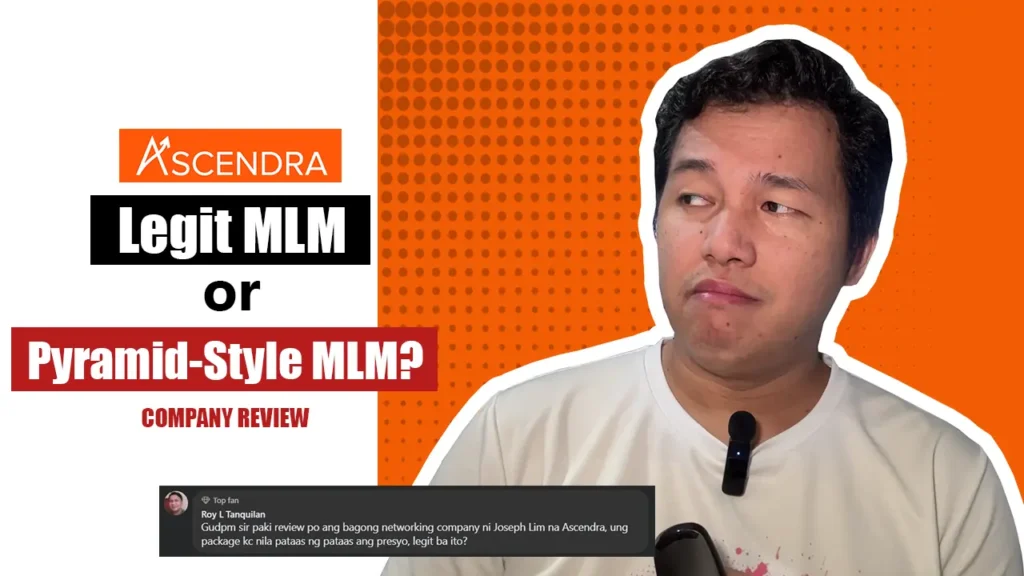
Recently, someone requested that I give my take on Ascendra International.
Good afternoon, sir. Kindly review the new networking company of Joseph Lim called Ascendra. Their packages keep increasing in price — is this legit?

Let’s dive deep into it.
Ascendra International is a new multi-level marketing (MLM) company that recently launched in the Philippines. It offers various products and services.
According to their business presentation, Ascendra sells three primary offerings:
To join Ascendra, you need to choose a membership package:
Each package comes with a combination of masterclass access, products, and/or insurance services, depending on your choice (MVP, MV, MP).
That means upon joining, you’ll receive something tangible—either a product, service, or both.
Here lies a concern. The MLM industry in the Philippines has long offered training, health products, and even insurance. So Ascendra isn’t breaking new ground here.
Take their health products for example:
These types of products are already saturated in the MLM market. And while they may have some internal value, their external market value is questionable.
There’s no distinct value proposition that sets Ascendra’s products apart from more affordable and well-known alternatives.
In most cases, the only people purchasing these products are already within the system—not external retail customers.
This creates a red flag: if the system doesn’t generate profit through external customers, members must rely on recruitment to earn.
Which leads us to the next discussion…
After deeply analyzing Ascendra’s business presentation, I noticed multiple red flags that resemble position-based income—a structure commonly found in pyramid-style MLMs.
Position-based income means your profits depend more on your rank in the system than your actual sales or recruiting effort.
Let’s illustrate this:
Suppose I purchased the Executive package (top rank), while my friend is only an Associate (lowest rank).
Even if my friend sells more and recruits harder, I’ll still earn more than them simply because I bought a higher position.
That’s the problem: rank is bought, not earned.
Now, let’s break down Ascendra’s income sources and where this issue appears:
Ascendra advertises a 20% direct referral bonus—but you only get the full 20% if you’re an Executive member.
So, unless you invest more money for a higher package, you’ll get smaller commissions. Only Executives consistently earn 20%.
This is position-based income.
Every package and product has a corresponding Binary Value (BV). 1 BV = P1.
You earn matching bonuses when you place people on your left and right team.
However, you can only earn the full P10,000 if you’re an Executive. If you’re just an Associate, you’ll only get P600, regardless of the volume.
That’s a massive disparity—and again, a classic position-based income red flag.
This is a 10% commission structure across 10 levels based on product or package purchases.
So even in team sales, your commission is rank-locked.
If someone under you earns from Binary or Unilevel, you get 10% of their earnings—as long as your rank qualifies.
So again, your commission depends on your position, not performance.
This fund rewards you with shopping vouchers, gadgets, travel, car, luxury car, or property.
However, it’s not enough to meet the Enrollment PV and Product PV requirements—you also need to be at a certain rank.
This creates positional gatekeeping—a manipulative reward system that favors higher-paying members.
To be legally classified as a pyramid scheme, the main income must come from recruitment, not product sales.
Ascendra has real products, which shields it from being an outright illegal pyramid.
However, the compensation system exhibits strong signs of a pyramid-style MLM:
This puts Ascendra in a “Not Recommended” category for me—especially for people who don’t have the capital to invest in high-level packages or those who don’t enjoy recruitment.
To be fair:
However, the pricing is high, the competition is stiff, and the system favors those who spend more upfront.
If Ascendra restructured its ranking system so that positions were earned through sales and performance, and not through spending, then it could be considered a legitimate MLM.
But as it stands now—with income and access tied to how much you pay to join—it exhibits the architecture of a pyramid-style MLM.
This is not recommended for people who don’t want to spend big or recruit aggressively.
What do you think about Ascendra International? Do you believe it’s a smart opportunity or a cleverly disguised pyramid? Let me know your thoughts in the comments.
Every day, I receive countless requests from viewers asking me to review platforms or websites to determine whether they are legit or scams.
Many of you leave comments on my YouTube channel, asking for legit checks or fraud alerts on platforms you're considering joining.
But here's the reality: I can't possibly respond to every request on time — some videos even get delayed because the review requests come in late.
That’s why I built something powerful and game-changing.
To solve this problem, I created a smart search engine that helps you identify whether a platform or website is safe to use, not recommended, or potentially dangerous. This tool is powered by Artificial Intelligence (AI), which gathers real-time data, analyzes patterns, and delivers a fair evaluation based on facts — not hype.
This is the same process I personally follow when reviewing platforms, now powered by automation and smart analysis.
The primary goal of this AI-based website checker is to determine whether a platform passes what I call the “Neil Yanto Review Standard.”
It’s the framework I use to manually evaluate any business or platform. This includes checking:
Now, instead of doing this manually each time, I’ve programmed my AI tool to follow these same guidelines to deliver fast and accurate results.
When you search for a website, the AI will return one of the following status results:
If a platform is approved, it means it meets the Neil Yanto Review Standard. There are two types under this:
If a platform doesn’t pass the review standard, it will fall under one of these categories:
If a website is labeled “Not Safe,” this means it should be completely avoided.
With this AI-powered search engine, you no longer have to rely solely on luck, gut feel, or wait for a video review. You now have access to an instant, unbiased evaluation that can help you:
So if you’re considering joining a platform or using a new tool, check it first through this search engine. You might just avoid your next big mistake.
👉 Use the tool now at https://neilyanto.com
This tool is built to protect people like you — those who are trying to earn online honestly and avoid falling into scam traps.
Have you tried using the AI search engine yet? What did it say about the platform you're planning to join?
Share your thoughts in the comments — I’d love to know what you discovered!

In this blog, I'm going to give you a deep and honest review of Clicknamics.
Many of you are asking: Is Clicknamics or clicknamics.com a legit way to earn online? Is it beginner-friendly? Or is it just another hyped-up system hiding behind fancy terms like "RevShare Affiliate Program"?
Let's break down everything in this detailed review.
Clicknamics presents itself as the Philippines' first "RevShare Affiliate Program," offering ready-to-sell products, expert training, and a so-called supportive community.
But what exactly is a RevShare Affiliate Program?
A RevShare (Revenue Share) Affiliate Program is a type of affiliate marketing where the company shares a portion of its earnings with affiliates for every paying customer they refer. The biggest difference from traditional affiliate programs is that this income is usually recurring. As long as your referred customer keeps paying, you keep earning.
In traditional affiliate programs, you earn a one-time commission per sale or action. But with a RevShare model, you could potentially earn lifetime income from a single referral.
So the question is: Does Clicknamics follow a true RevShare model?
Let’s analyze.
Yes, and this is already a red flag.
In legitimate RevShare affiliate programs like Bluehost, NordVPN, or Binance, you don’t need to buy anything to become an affiliate. These programs are performance-based, meaning your success depends on your ability to promote and sell the product.
But in Clicknamics, you have to pay upfront. You must purchase a Starter package worth ₱2,999 to become an affiliate.
Only after this can you access their coaching and unlock other packages. This alone contradicts the fundamentals of affiliate marketing.
Here are the different levels:
You can't access Basic, Pro, VIP, or Elite unless you've purchased Starter and gone through the coaching session.
No. And that's another red flag.
In real RevShare programs, you can usually sign up for free or apply with basic information. Once approved, you get instant access to your affiliate dashboard.
In Clicknamics, you must:
This mandatory coaching is not educational; it's a sales trap (more on that later).
Yes.
In legitimate affiliate programs, commission rates increase based on your performance, not how much you paid.
But in Clicknamics, commissions increase based on your upgrade level:
You earn more only if you buy a higher-priced package — this is not performance-based.
Clicknamics also offers monthly subscriptions (Lifestyle) for ₱999/month, giving you recurring commission and lifestyle rewards.
Depending on your level, you earn:
But these rewards also have earning limits per level:
Again, your ability to earn depends on what you paid, not what you sold.
Clicknamics includes multi-level commissions:
This structure is clearly MLM-style, not affiliate.
No.
If a Starter refers 100 people and an Elite refers 100 people, the Elite earns more because of a higher commission tier.
That means income is package-based, not performance-based — which again violates the principle of affiliate marketing.
Based on the structure, recruitment is the core strategy.
Why?
Ideally, yes. But in Clicknamics, most affiliates purchase the product to qualify for commissions, not because they genuinely need it.
This is another red flag.
No.
This isn’t coaching — it’s a high-pressure funnel disguised as mentorship.
But all of these are locked behind payment walls and sales pressure.
Clicknamics is not a true RevShare Affiliate Program. It uses the term for marketing purposes but follows a pay-to-play MLM structure.
🟡 Partially. There are products and a system, but the ethics are questionable.
❌ No. Especially not for beginners. High pressure, high risk.
🟡 Technically not a scam, but highly manipulative and recruitment-heavy.
If you're serious about affiliate marketing or RevShare, you deserve better.
There are many real affiliate programs where you can:
Ask yourself:
Would I still buy this product if there were no commissions?
Would I still recommend this system to someone I care about?
If the answer is no, then maybe it’s not worth it.
Let me know your thoughts in the comments. Is Clicknamics a smart opportunity or a system full of red flags?
Your feedback could help someone make a better decision.

We will thoroughly examine a platform that has caught the attention of many: Aztro Innovations.
At first glance, it presents itself as a crypto trading platform powered by artificial intelligence, offering effortless profits to members.
But beneath the surface, does it truly deliver real trading value, or is it part of a growing list of Ponzi schemes preying on unsuspecting investors?
This comprehensive investigation will answer the following questions:
This is a deep-dive analysis, combining insights from code, smart contracts, platform behavior, and user experience. If you're considering putting money into Aztro Innovations, read this first.
According to its official pitch, Aztro Innovations is a platform focused on crypto trading and AI-powered automation.
It claims to offer profit-sharing and daily returns, even for people with zero trading knowledge.
It presents itself as a high-tech, passive-income solution where members simply choose a trading plan and watch their money grow.
Here are the advertised trading plans:
The question is: Are these returns real?
Unfortunately, no.
Based on our investigation of the front-end scripts, smart contracts, and the actual system behavior, Aztro Innovations is not connected to any real financial market.
The trades shown on the platform are fake — nothing more than HTML-generated tables simulating returns with no actual trading taking place in the background.
One of the most obvious red flags lies in the promised returns. Take a closer look at the numbers:
These percentages are unrealistic by any legitimate trading standard.
Even the most successful hedge funds or institutional crypto traders do not guarantee these kinds of returns.
The crypto market is volatile and unpredictable, and any system that offers such high fixed returns in such short durations is either hiding significant risk—or it's fabricating profits entirely.
Such fixed, high returns without corresponding risk transparency are classic signs of Ponzi schemes.
Platforms like this rely on a continuous influx of new participants to pay existing members.
The illusion of easy, fixed profits encourages reinvestment and recruiting, which keeps the scam running until it collapses.
When users log in, they can:
Once submitted, the system shows the trade in a table, including start date, end date, projected earnings, and a progress bar.
But here's the catch: None of these actions actually place trades on real exchanges like Binance or Coinbase.
All of it is client-side UI manipulation.
There's no backend API integration, no trading engine, no interaction with any exchange.
The returns are pre-calculated and displayed using JavaScript.
We analyzed multiple script files from Aztro Innovations, and here are the major findings:
There are zero references to API functions (e.g., Binance API, CoinGecko, TradingView Webhook) that would indicate real trading. Instead, we found:
innerHTML, document.createElement, setTimeout, appendChild
These are used for updating the screen, not interacting with a live market.
Legit trading platforms log trades to either the blockchain or centralized exchange logs. In Aztro's case, none of that exists. There's no real-time price feed, slippage handling, or trading confirmations.
Profits are "generated" by the platform itself. There's no volatility or loss — just guaranteed daily gains. This is a clear sign of simulation, not trading.
Another major red flag is the referral commission structure:
This structure incentivizes recruitment, not real trading. Profits are likely coming from new deposits, not actual investment growth. This is a classic hallmark of a Ponzi Scheme.
Aztro Innovations also launched its own cryptocurrency called AZT Token, hosted on the Binance Smart Chain (BSC). We reviewed the full smart contract (15 files in total), and here are the key issues:
function setBlackList(address _address, bool _blacklisted) external onlyOwner {
    isBlackListed[_address] = _blacklisted;
}
If the owner blacklists your address, you lose all ability to send or receive tokens.
Every critical function in the contract is guarded by onlyOwner. This includes setting taxes, pausing the contract, managing exemptions, and more. There is no DAO or governance structure.
The AZT Token has no actual use case. It's not used in DeFi, staking, governance, or liquidity provision. It simply exists to give the illusion of a legit crypto asset.
The owner can set a tax fee up to 20% and redirect that to any wallet.
function setTaxFee(uint256 _taxFee) external onlyOwner {
    require(_taxFee <= 20);
    taxFee = _taxFee;
}
They claim to show billions in trading profits during live streams, but these are just numbers on screen. There's no actual PNL (Profit and Loss) data, no portfolio transparency, and no exchange-verified trading history.
They advertise a so-called reserve worth PHP 24.5 million. But there's:
Since the entire system relies on new user deposits to fund older user profits, it only stays alive as long as money keeps flowing in. When withdrawals exceed deposits, the system collapses, and latecomers lose everything.
Aztro Innovations has no secondary license from the SEC to accept investments or manage funds. It's also not a registered Virtual Asset Service Provider (VASP) under the Bangko Sentral ng Pilipinas.
After a complete and technical review, Aztro Innovations shows all signs of being a Ponzi scheme with no real trading, fake token utility, centralized power, and recruitment-based income.
If you invest:
If you're currently a member:
If you're considering joining:
Now it's your turn: Do you believe Aztro Innovations is a legit platform? If yes, what proof can you provide aside from "I earned money"?
Or do you now see the red flags and believe this is a scam waiting to implode?
Leave a comment below and let your voice be heard. Let’s protect each other.

Napansin mo ba?
Parang hindi na talaga bumabalik sa "normal" ang mundo.
Presyo ng bilihin? Laging pataas.
News? Paulit-ulit pero walang klarong sagot.
Technology? Umaasenso, pero mas maraming tao ang parang nalalayo sa isa’t isa.
Marami na ang “gising,” pero mas marami pa rin ang tulog—nahuhulog sa bitag ng lumang sistema.
Ito na ba ang tinatawag na "Global Reset"?
At kung oo, paano natin malalaman?
Gaano ito katagal?
Anong mga senyales ang kailangan nating bantayan?
Ang Global Reset hindi lang basta theory.
Isa itong mabagal pero seryosong pagbabago kung saan unti-unting binabaklas ang luma para makabuo ng bago.
Ito ang mas detalyado at totoong breakdown ng mga kaganapan mula 2020 hanggang 2050.
Ito ang yugto ng unang kalampag. Dito nagsimula ang unti-unting pagyanig ng buong mundo.
Goal ng phase na 'to: Gisingin ang isip ng tao at ipakita na hindi na babalik sa dati ang mundo.
Unti-unti nang pinapalitan ng AI at automation ang mga tao sa maraming trabaho. Narito ang mga delikado:
Mga pera na malapit sa bangin:
Maging USD at Euro, hindi immune:
Pwede bang magka-digmaan ang China at US?
Kung hindi man magka-giyera:
Bakit isa ito sa mga posibleng mangyari?
Simula pa lang ng global reset noong 2020–2025, sunod-sunod na ang malalaking conflict na nagpapakita na hindi na stable ang global order:
Dagdag pa rito, tumataas na rin ang distrust sa centralized governance.
Mas maraming citizens ang naghahanap ng local autonomy, decentralized economy, at grassroots governance.
Dahil dito, humihina ang kapit ng central powers, at lumalakas ang mga tinig para sa pagbabago ng sistema.
Ang tension sa pagitan ng China at US ay hindi lang tungkol sa Taiwan, kundi bahagi ng mas malawak na pagbabago ng power dynamics sa mundo.
Ito ay senyales na ang global reset ay hindi lang digital o economic—kundi geopolitical din.
Governments ipu-push ang Central Bank Digital Currency (CBDC):
Pwede magka-chaos:
Mga bansang pwedeng manguna:
Sa mga bansang posibleng mamuno, Canada ang isa sa pinaka-strategic na bansa dahil sa resources, stability, at political alignment sa mga western values.
Kaya naman, ayon sa ilang geopolitical analyses, tulad ng ulat mula sa Council on Foreign Relations at Brookings Institution, laging priority ng US na palakasin ang relasyon nito sa Canada—hindi lang sa aspeto ng defense (NORAD partnership), kundi pati sa ekonomiya at digital policy alignment.
Habang hindi pa kumpirmado kung may partikular na layunin si Trump na "kontrolin" ang mga bansang ito, ang pag-foster ng deeper alliances ay bahagi ng long-term geopolitical chess game ng US.
Sa panahon ng global reset, ang mga bansang may decentralization potential ay nagiging strategic allies—hindi lang dahil sa kasalukuyang resources nila, kundi dahil sa posibilidad nilang maging role model ng bagong sistema.
Hindi na “parating” ang reset. NAGSIMULA NA.
Bawat dekada, unti-unting nawawala ang luma. Isang bagong mundo ang tumataas.
Hindi mo kailangan maging sobrang talino o yaman. Ang kailangan lang: readiness.
Simulan mo na: magtanong, maghanda, magbahagi. Dahil ang future ay hindi hinihintay—ginagawa ito ngayon.

Today, we’re going to dive deep into one of the most requested topics: Is Crowdbit Academy legit, or is it a massive scam and Ponzi scheme disguised as a trading and educational platform?
This blog is a full breakdown based on real-world signs, logic, and verifiable data to help you decide.
According to their business profile, Crowdbit Academy or crowdbit-academy.com claims to have started in 2017 with a mission to help people through financial education and crypto investment knowledge.
They say it began as a personal fund management effort and has now evolved into a crypto trading company offering a mix of educational programs and investment opportunities.
But the question is: Is that really true?
Do they truly operate a crypto trading company with educational offerings? Or are they just another name in a long list of Ponzi schemes pretending to be legitimate?
My short answer? Crowdbit Academy is not legit. It bears all the signs of a Ponzi Scheme.
Let’s break it down point by point so you can see clearly why this platform is something you should avoid.
One of the biggest red flags of a scam is a guaranteed high return — especially daily income.
Crowdbit promises the following returns:
This is mathematically unsustainable. No legitimate trading company in the world, not even professional hedge funds, can offer guaranteed 8% profits daily. Trading is risky and volatile.
Legit trading services never promise fixed profits, especially not on a daily basis. If a platform does that — it’s a scam.
A legitimate trading service earns through actual market trading. Whether manual, AI-based, or bot-driven, it’s always connected to real trading platforms like Binance, Bybit, OKX, or Bitget.
But Crowdbit? It has no visible trading activity, no linked exchanges, no real-time trading logs, and no API connections.
Instead, the money you earn comes from new user deposits — the essence of a Ponzi scheme.
They’re simply recycling funds:
There’s no actual trading behind the scenes — just circulating funds and buying time.
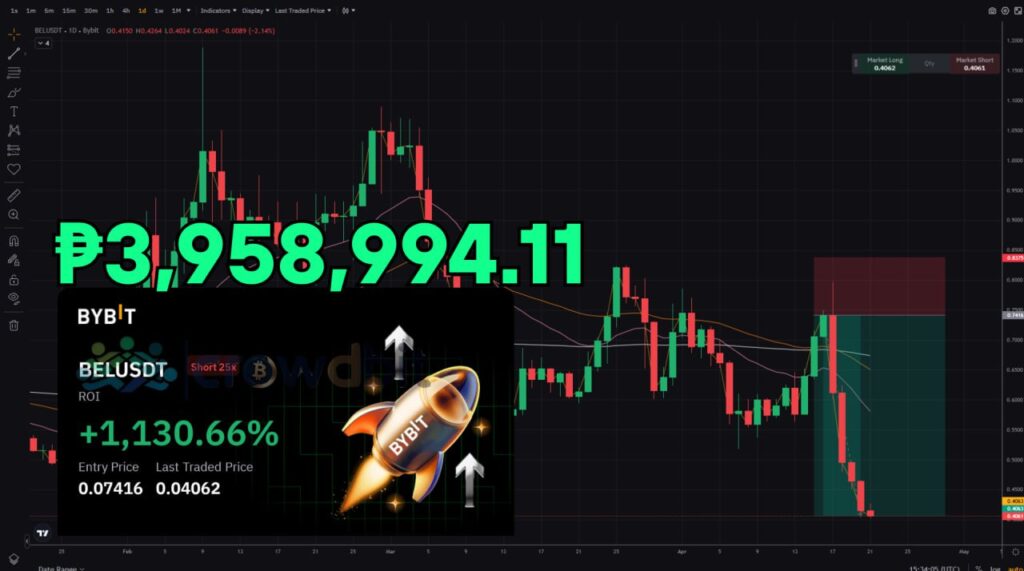
Crowdbit often showcases screenshots or claims of members earning thousands or even millions. These are heavily edited images — not real PNLs (Profit & Loss reports).
If you’ve ever traded even once on Binance, you’d know what real PNLs look like. These images? All faked.
Crowdbit claims it started in 2017. But here’s the truth:
They justify this by saying they were "Private Offline" — another tactic used by scam platforms to avoid questions.
Real companies have years of digital trace — old Facebook posts, YouTube uploads, press releases, legal registrations, or testimonials. Crowdbit has none of those.
Even their so-called CEO has no substantial online presence prior to 2023. His Facebook page? Created in 2019, but only active with shared posts in 2023. That’s not how legitimate entrepreneurs operate.
Bottom line: Their entire backstory is fabricated to create fake credibility.
Legit trading platforms don’t lock your funds.
With Crowdbit:
This is a classic Ponzi tactic:
In real trading:
Crowdbit’s system is built to make it seem like everything is controlled — when in fact, they’re just stalling and gathering more cash.
The core income of Crowdbit users comes from referral commissions:
That’s a multi-level referral structure — a textbook Pyramid Scheme setup.
In a legit trading service:
Crowdbit pays from user deposits, not company profits. That’s a Ponzi scheme in disguise.
If a platform pays you for referrals using other people's deposits, it's not sustainable. It’s a scam.
Crowdbit claims they are registered with DTI. But here’s what you need to know:
Without SEC regulation, this platform is operating illegally in the Philippines.
Based on all the evidence, yes — Crowdbit Academy is a Ponzi Scheme and fake trading platform.
Let’s recap the signs:
Crowdbit is not a real trading company. It’s a money-cycling system pretending to be a crypto business.
In real trading:
But in platforms like Crowdbit:
Even if you made money in the beginning, that money came from other people’s losses.
You’re not winning — you’re just early in a trap.
Now I want to hear from you:
Do you think Crowdbit is a legit platform? Why? Or do you agree that it’s a well-dressed scam? Share your thoughts in the comments.
Your comment might just help someone make the right decision.
Stay smart, stay safe, and avoid shady platforms like Crowdbit.

Today, we're going to talk about a brand-new platform (SVAMAANPH) that claims you can earn by funding a lending program.
The burning question is: Is it legit? Or just another well-disguised scam?
To answer this, we’ll discuss seven crucial topics regarding this platform. I’ll walk you through what the platform is, how it works, how people make money, and what red flags to look out for.
This review is based on personal research, financial knowledge, and experience with similar schemes.
SVAMAANPH or SVAMAAN Financial Holdings claims to be a crowdlending cooperative focused on microfinancing.
The idea is to allow members of the community to lend and borrow money from each other in a supposedly secure and controlled environment.
So what is a crowdlending cooperative?
It's a cooperative system where members pool money into a fund.
This fund is then loaned out to other members.
Lenders earn interest, and borrowers get access to much-needed funds.
The platform acts as a middleman, managing loans, verifying borrowers, and ensuring collections.
On paper, SVAMAANPH appears to fit that mold. But does it work like a real crowdlending cooperative? Let’s find out.
Now let’s talk about one of the most enticing parts of the platform: earning money as a funder.
In SVAMAANPH, you can choose from three term plans:
You start earning immediately after funding, even if there are no real borrowers. The system guarantees payouts every few days without delay.
But here's the red flag:
In a legitimate crowdlending cooperative, income starts only when the borrower repays their loan.
Let’s compare this with how real crowdlending works.
In a real system, all money is placed in a pooled fund.
When someone applies for a loan, the platform allocates part of the pooled fund.
Only when the borrower starts repaying, will the lender earn—proportional to their share in the fund.
Example:
You see? In a legitimate model, profit is slow, uncertain, and dependent on borrower performance.
But in SVAMAANPH, the moment you fund your wallet, returns are guaranteed, high, and not tied to real loan repayments.
That’s a huge red flag and goes against how legitimate lending platforms operate.
Borrowing money from SVAMAANPH is also unusual. Here’s how it works:
There are three loan types:
You cannot apply for a loan unless you pay the "Credential Amount" upfront.
This is a red flag known as an advance-fee scam.
In real lending setups, especially in regulated cooperatives or banks:
In SVAMAANPH, the borrower must complete payments first and wait for a maturity period before the loan is even approved.
There’s no guarantee that you’ll receive the loan after the process.
This is where it gets even more suspicious. Here’s their commission system:
This means you can earn money simply by getting others to “cash in” to the platform.
This is a Multi-Level Marketing (MLM) and Ponzi-style referral system.
In legitimate lending systems:
This structure encourages aggressive recruiting, a signature of scams.
Worse, you must have active funds to qualify as an agent, meaning you must invest money before recruiting.
Again, this is classic Ponzi scheme behavior.
Another red flag is the absence of background checks.
You can borrow ₱500,000 by simply paying a credential fee and waiting.
There’s no credit score verification, no collateral, no proof of income, no co-signer.
That’s incredibly risky and unrealistic.
Legit platforms, even peer-to-peer lenders, use automated systems to assess a borrower’s ability to pay.
They ask for proof and validate identity.
SVAMAANPH skips all that.
This creates a delay structure.
It seems like a method to control cash flow so the platform doesn’t collapse.
This is a strategy often used in Ponzi schemes, where funds from new investors pay off the older ones.
In a real financial institution, withdrawals are on-demand or processed within 24 hours.
SVAMAANPH does not show any proof of SEC registration, BSP compliance, or CDA recognition as a cooperative.
This alone is enough reason to avoid it completely.
Based on the 7 red flags we discussed:
SVAMAANPH is not a legitimate crowdlending platform. It shows all signs of a classic Ponzi scheme.
Yes, some people might earn money for now, but that’s only because new investors are funding the system.
When those new signups stop, the entire platform will likely collapse.
That’s how Ponzi schemes always end—with more people losing money than those who gain.
Absolutely not.
Avoid it, warn others, and report it if possible.
There are safer ways to invest and earn money online.
Choose regulated financial institutions. Always do your research.
What do you think about SVAMAANPH? Have you tried it? Did you earn money or lose money? Do you believe it's legit? Or are you convinced that it's a scam?
Leave a comment below and help others make informed decisions.
Your experience could save someone from being scammed.

In this blog, I’ll answer the burning question: Is the FunStep app legit, or is it just another scam that might disappear one day—taking your money with it?
FunStep is a mobile application that claims to let users earn money by simply walking.
Once you register, the app gives you a free sneaker.
This sneaker is used to convert your steps into cash.
The higher the level of the sneaker you buy, the better your profit conversion rate becomes.
Aside from the free shoe, users can also purchase other sneakers that promise larger daily earnings.
After receiving your free sneaker or purchasing a higher-level one, you can start earning by walking.
The more steps you accumulate, the more you earn—at least, that’s the promise.
Each sneaker has a step requirement and a corresponding daily earning. For example:
Sounds promising, right? But let’s continue.
You can also earn by recruiting other users. The app pays:
The more people you refer, the more you earn. Sounds familiar? It should.
As your level increases in the app (through activity or recruitment), you gain access to bonus earnings.
Users who reach higher VIP levels earn more not just from their direct steps or referrals, but also from the total activity and investments of their downlines.
Based on my personal experience and analysis, I believe FunStep is not a legitimate move-to-earn application. Here are the red flags I found:
You don’t need to walk at all to earn steps.
Simply shaking your phone increases your step count.
This is a major red flag.
Any legitimate move-to-earn app should be linked to fitness tracking tools like Google Fit or Apple Health.
These tools verify that the user is actually walking.
The step tracking feature in FunStep seems to be just a gimmick—a front for the app’s real business model.
WalkTask is an example of a legit app. In WalkTask, you actually have to walk to earn gift boxes. Inside these boxes are coins. Collect 3,000 coins and you can redeem $5 via PayPal. It’s slow but real, and backed by ad revenue.
Most sneakers in FunStep offer over 100% ROI. Some offer 400%+. That means for a small investment, you can earn up to four times your money in a short period.
For example:
Ask yourself: Where is this money coming from?
There are no ads, no surveys, and no real services backing this income. The only visible source of money is the new users who are buying sneakers.
That’s not sustainable.
FunStep doesn’t qualify as a free-to-use app. You must invest to earn. That’s a red flag because:
FunStep has none of these. The sneakers aren’t NFTs. There’s no blockchain. No real token. No staking. No transparency.
In short: It’s all made up.
FunStep is only available on Google Play, not the iOS App Store. Why is that a red flag?
Because Apple has stricter guidelines. They check for:
If FunStep were legit, they would’ve made sure to pass Apple’s review process. Being absent from iOS is a warning sign.
Here’s what makes FunStep feel like a classic Ponzi scheme:
If commissions come from your invite’s deposit (not the platform’s real earnings), that’s not affiliate marketing—that’s a scam.
In real affiliate systems (like Amazon, Binance, etc.), commissions are paid from company profits based on sales, not on a person’s deposit.
FunStep also uses a pyramid structure. You earn from your referral’s referral, and so on. There are VIP bonuses if you recruit more people. This encourages endless recruitment instead of real product use.
Because the system will collapse. If more people start withdrawing than depositing, the platform can no longer pay users. That’s when the scam reveals itself.
The last ones in—the new investors—lose everything.
Based on everything I’ve seen, I believe FunStep is a Ponzi scheme in disguise.
If you value your money, stay away from this app.
Do you believe FunStep is a legit way to earn? Or do you agree that it’s another high-risk scam preying on unsuspecting users?
Drop your thoughts in the comments. Let’s help others decide whether they should invest—or avoid this app completely.

In this post, we'll thoroughly examine the legitimacy of Pr1me Pinas (or Prime PH).
Is it a reliable way to earn passive income, or is it another cleverly disguised scam?
Whether you already know about this platform or are just hearing about it now, this long-form breakdown will help you see things clearly.
Prime Pinas is a website that offers cryptocurrency trading services. According to its marketing materials, the platform aims to help people earn passive income through investment plans.
They currently offer two investment options:
These plans promise fixed returns over a specific period.
Based on my personal research and analysis, Prime Pinas is not a legitimate platform and displays multiple red flags similar to known Ponzi schemes like Elevate Global.
It uses a very familiar model: offering high returns, repackaged under a new brand and slightly different wording, but the core system remains the same.
Prime Pinas claims:
Why is this suspicious?
A 5% daily return equates to about 150% monthly and 1,825% annually. This is impossible in any legal, regulated investment.
Compare this to legitimate investment options in the Philippines:
| Investment Type | Average Annual Return |
|---|---|
| Bank Time Deposit | 0.25% - 1.5% |
| Pag-IBIG MP2 | 6% - 8% (non-guaranteed) |
| Stock Market (PSEi) | 5% - 10% |
| Mutual Funds | 4% - 12% |
| Bonds | 3% - 6% |
Clearly, Prime Pinas’ returns are too good to be true.
A legitimate investment platform is anchored to a tangible product or a real service. For example:
In contrast, Prime Pinas provides no transparency about what it does with your money. They only claim it's “trading,” or that their “AI bot handles everything,” or worse—"it's a secret strategy."
No actual trading reports or product flows are shown.
You know it’s recruitment-focused when:
This isn't real business income; it's a typical Ponzi setup, where new money is used to pay old users.
In legitimate trading, commissions come from transaction fees, not deposits.
Prime Pinas gets commissions from referred deposits, which is a major scam indicator.
Legit platforms proudly show the profiles of their CEOs and founders—often with LinkedIn pages, Google presence, and credible backgrounds in finance or business.
Prime Pinas shows a supposed CEO, but:
How can someone promise a 70% return with no documented experience?
A common trick among scams is flaunting:
Only SEC with a secondary license can authorize a company to solicit public investments.
Prime Pinas is DTI-registered only, which is a red flag.
Warning signs include:
These are classic tactics to prevent people from getting their money out.
Prime Pinas allows daily withdrawals—but this alone isn’t enough to prove legitimacy, especially if the source of the income is still unclear.
Scams often push people to act fast:
Legit investments allow time to think and always provide risk disclosures.
Prime Pinas offers fixed returns and makes exaggerated promises—30% to 70% gains without risk. That's a huge red flag.
Legit platforms show:
Prime Pinas offers none of these. Their dashboard is a mock-up that shows fake growth visuals. There is:
Out of 8 red flags, Prime Pinas fails in 7:
Pr1me Pinas is a high-risk Ponzi-like platform.
Just like Elevate Global, it survives only through new investor deposits and presents no evidence of real trading. It’s highly likely to collapse and leave many people scammed.
Do not promote, join, or invest in platforms like Prime Pinas.
What do you think about Prime Pinas?
Do you believe it’s legit? Why?
Or do you agree that it has all the signs of a potential scam?
Drop your thoughts in the comments below and help others decide wisely before it’s too late.