
Yesterday was one of those days in crypto where markets didn’t whisper — they yelled.
Traders woke up to a market struggling to balance on a tightrope, caught between bearish pressure and intermittent sparks of optimism.
By the end of the day, Bitcoin and the broader crypto space showed signs of both panic selling and renewed appetites for risk, setting the stage for today’s important price action.
Early in the day, Bitcoin nosedived below key psychological support levels, dipping under $69,000 on sudden sell orders that cascaded across exchanges.
Markets were fraught with fear — not just technical selling but real dread. Traders watching the price charts saw BTC sliding, and that alone pulled down confidence across altcoins.
This kind of drop often triggers automated liquidations and forces weaker hands out of positions, which in turn amplifies volatility.
This move was broader than just crypto charts: global risk assets, including tech stocks in the S&P 500 and Nasdaq, were under pressure as well, dimming the overall appetite for high-beta assets.
When the stock market shivers, crypto often feels the chill too.
Right when it looked like fear might morph into capitulation, something familiar in crypto happened — dip buyers appeared.
In particular, traders piled into XRP, helping it outperform Bitcoin and Ethereum on the day.
Investors saw the sell-off as an opportunity to pick up Ripple-linked tokens at lower levels, and that gave some of the broader market a lifeline.
XRP’s move wasn’t just a random bounce — it showed rotation.
Some traders believed that Bitcoin’s weakness, after the sell-off, meant the path of least resistance was back into selected altcoins with strong narratives or catalysts.
Analysts watching the technical charts described the overall market condition as one of indecision. The absence of strong buy signals, combined with erratic swings, kept traders on edge and prevented a clear trend from forming.
This indecisive picture means that investors were quick to react — selling bad news and rotating into perceived bargains.
With major economic indicators — including U.S. inflation reports and central bank minutes — on deck this week, traders were reluctant to take aggressive positions. Macro risk influences crypto sentiment far more than many admit. A worse-than-expected inflation print could push markets into risk-off mode; a softer reading might restore some confidence.
Recent exchanges mishaps — even if occurring earlier — continued to loom in sentiment. Reminders of operational risks at big platforms, including internal failures that once triggered rapid volatility, left some traders skittish.
These kinds of headlines sow lingering doubt about market infrastructure, encouraging some players to stay on the sidelines.
Sentiment: tug-of-war between fear and hope.
Market breadth matters here. If Bitcoin continues to stabilize and institutional interest resumes, prices could rebound, lifting smaller tokens along with it. But if volatility spikes, we could see deeper correction before recovery.
Investors and traders should watch:
Yesterday wasn’t just about price swings — it was about tone. Fickle markets, cautious money, macro uncertainty, and pockets of opportunistic buying all mixed into a narrative that’s neither fully bullish nor fully bearish.
For traders and investors alike, this is a market that rewards context over impulse — patience over panic.

If you found UniLive through Facebook promotions, chances are the pitch sounded simple: download the app, do some tasks, maybe go live, and you can earn.
Some promoters frame it as a “Web3 social platform” where both creators and viewers can profit.
That story falls apart the moment you step inside the app and follow the earning paths that aren’t shown upfront.
Once you click through the hidden earning modules, pledge pages, staking screens, “nodes,” and team reward mechanisms, you’re not looking at a normal creator monetization system anymore.
You’re looking at a classic structure: very high advertised returns, fixed scheduled payouts, and multi-level inviter rewards, the exact ingredients that repeatedly appear in ROI scams dressed up with crypto terms like “staking,” “restaking,” and “pledge.”
This blog post lays out what UniLive claims to be, what it actually promotes inside the app, how the “earnings” are presented, how real staking works (so you can compare), and why UniLive’s model points to a scam, especially the UNX/SEE token setup.
UniLive presents itself as a short-video and live streaming social platform, sometimes marketed with Web3 language like “ecosystem,” “tokens,” and “rewards.” On Facebook, the messaging commonly revolves around:
On the surface, that looks similar to real social platforms where creators earn through ads, subscriptions, brand deals, or gifts.
The problem is: UniLive’s main earning engine (based on what appears inside the app) is not advertising-based creator income.
It’s capital lock-ups (pledge/stake/restake) with extraordinary yields and structured team payouts.
And that is a completely different category.
A real creator platform’s product is the platform itself: content distribution + monetization mechanisms (ads, CPM, revenue share rules, audience tools, subscriptions). UniLive’s internal pages show different “products,” and they revolve around financial returns.
Inside the app, you can access pledge or staking screens where you lock UNX for a set period (example: 30 days). These pages display:
This is not how normal creator monetization works. It’s not even how legitimate staking rewards normally behave (we’ll compare later).
There are modules that look like you can purchase a “node” or package, with details like:
This resembles an ROI product: pay in, wait a fixed period, receive a fixed return.
UniLive also includes task-based earning flows. Promoters love to highlight this part because it feels harmless: watch content, comment, like, follow, watch live streams.
But the task system is not presented as the main sustainable business revenue stream. Instead, it functions as an onboarding funnel: it introduces users to earning tokens, moving tokens, and eventually participating in the higher-yield pledge/restake programs.
The wallet screens often show actions like “transfer” or “purchase,” which is important because it links task rewards to token acquisition and funding flows.
The most critical piece is the team reward structure. Inside the app’s explanations, you can see mechanisms that reward:
And these are often denominated in stablecoin terms (USDT) within the explanation.
That is not a normal referral program (like “invite a friend and get a small bonus”).
This is a structural dependency: the payout system rewards a chain of recruiters.
In the internal promotion language, “restaking” is framed as the real money-maker—sometimes even explicitly described as the main source of income compared to gifts or social activity.
That alone tells you what the app is: the social layer is a wrapper; the financial lock-up layer is the core.
When you follow the actual earning paths promoted inside the app and by promoters, the earning story is typically this:
Notice what’s missing: a clear explanation of how the system generates enough external revenue to pay these yields without relying on new money.
That’s where the scam pattern appears.
Before we judge UniLive, it’s important to first understand how legitimate staking actually generates income.
You might be wondering:
“In staking, do we earn by validating blocks and transactions, where users pay fees that become our rewards? And for platforms like Binance, do earnings come from lending funds to borrowers who pay interest? Are there other legitimate ways staking can generate returns?”
Yes — those core ideas are correct.
The key point is this: different products have different revenue sources. Real staking and earning platforms always have a clear and explainable source of income. If a platform cannot clearly explain where the money comes from, that’s a major warning sign.
Let’s break down the legitimate models clearly.
This is the original, most legitimate staking model.
Important detail: most people are not validators. They are delegators. They delegate stake to validators and share in the rewards.
Key characteristics of real staking:
Here, the user is not directly validating anything. The exchange handles the process.
There are two legitimate sources of yield inside exchange products:
A) Delegated staking through the exchange
Your assets are pooled and delegated to validators. You receive a share of on-chain staking rewards. The exchange takes a fee.
B) Lending / Earn products
This is not “staking” in the protocol sense. This is lending.
This model is legitimate if it’s transparent: you know it’s lending, you accept counterparty risk, and the platform provides disclosures.
In DeFi, you can provide liquidity to pools.
This can be legitimate, but it is not guaranteed and it has risks:
Some networks and DeFi projects distribute new tokens as incentives.
This can be legitimate if:
But it is also the model most commonly abused because you can “pay” people by printing tokens with no real external revenue.
This matters because UniLive’s advertised yields are in a completely different universe.
Typical, realistic ranges:
And yes: APY is annual by definition (“Annual Percentage Yield”).
If someone says “daily APY,” that’s either ignorance or deliberate marketing manipulation.
No.
Real staking rewards come from protocol economics:
Recruitment has nothing to do with blockchain security. If a “staking” program pays you more because you recruited people, it is no longer staking. It’s a network marketing payout structure.
Exchanges can have referral programs, but those usually relate to trading fee discounts or small bonuses, not a deep 15-level payout chain tied to staking deposits.
So when you see:
That is a major scam signal.
Legit staking (PoS):
Binance Earn / lending:
UniLive pledge/restake:
The structure shown inside the app pushes users to:
That points to a familiar source of payouts in scams:
new deposits + internal token issuance + recruitment flows.
Legit markets do not sustainably pay triple-digit APY with fixed schedules.
UniLive shows:
That kind of reward behavior looks scripted rather than market-driven.
Legit staking:
UniLive:
A platform controlling the numbers is not the same as an independent blockchain verifying the numbers.
Another important pattern: the heavy ROI features are not always front-and-center. Users often have to click deeper inside the app to find pledge, restake, nodes, and team mechanism explanations.
Why does this matter?
If a program is legitimate, it normally promotes its model openly:
When the high-yield mechanics are buried inside the app, it can serve as:
This is common in modern “app-wrapped” investment schemes.
When people hear the term “fake token,” they assume there is no code at all. But that’s not the real issue.
A token can technically exist and still be fake in the economic and blockchain sense if:
In legitimate crypto systems, tokens are on-chain, transparent, and independently verifiable.
UNX and SEE are not.
They do not appear on any public blockchain and function only inside the UniLive app. Instead of real cryptocurrencies, they operate as internal credits used for:
In short, UNX and SEE are fake crypto tokens — they are simply platform-controlled balances stored in a database, not genuine blockchain assets.
There is a separate, publicly known token that uses the ticker UNX (commonly associated with Unchain X in public market listings).
When a new ecosystem uses the same ticker, it creates confusion:
Important note: without internal documentation proving intent, we cannot claim “they did it intentionally.” But we can confidently say the effect is deceptive: ticker collision increases the chance of misleading people.
In many scam or closed ecosystems, custom tokens exist for one main reason: control.
Internal tokens allow the platform to:
If your “earnings” are mostly internal token credits, and the platform is the only way to convert them into real money, you are not holding a free-market asset.
You are holding a number controlled entirely by the operator.
Why it’s a red flag:
Legitimate returns are variable. High yields can happen temporarily in risky DeFi, but fixed triple-digit APY with scheduled payouts resembles a scripted ROI product, not staking.
Why it’s a red flag:
Fixed “yield rate” + “release days” + “buy now” packaging looks like selling investment slots.
Why it’s a red flag:
Staking does not require recruitment. Multi-level reward chains are hallmarks of MLM-style payout systems.
Why it’s a red flag:
When the main income is “restaking,” the core engine is capital lock-up and recycling—not content monetization or network validation.
Why it’s a red flag:
The social layer becomes a marketing wrapper. The money is made in hidden pledge/restake mechanics.
It’s worth repeating because many people get trapped here.
Even if some users are currently receiving payouts, that doesn’t prove legitimacy. In Ponzi-style schemes, early payouts are often used to attract more deposits.
Based on the earning mechanisms promoted inside the app and by promoters, UniLive’s core “income” model matches the structure of an ROI scheme:
Real staking is a network security function. Real lending yields come from borrowers paying interest. Real DeFi yield comes from fees and incentives with market risk.
UniLive’s model, as presented through its internal features and promotions, does not align cleanly with any of those legitimate revenue sources. Instead, it aligns with a structure where payouts are funded by continuous inflows (new deposits and reinvestment loops), supported by token accounting inside a controlled environment.
That is why the most accurate conclusion is:
UniLive is not a legitimate staking platform. It is an app-wrapped investment scheme using staking language to appear credible.
| Category | Legit PoS Staking (Network Staking) | Legit Lending / Earn (Exchange/DeFi) | UniLive “Staking / Restaking / Pledge” |
|---|---|---|---|
| Primary revenue source | Transaction fees + block rewards | Borrower interest + funding fees | New deposits + internal token issuance + recruitment inflow |
| Is it verifiable on-chain? | Yes (explorer, validators, blocks) | Partially (DeFi yes; CeFi depends on disclosures) | No (internal app screens; no transparent chain proof) |
| Typical APY range | ~3%–8% (sometimes up to ~15% risky/temporary) | ~3%–10% (varies) | 100%–200%+ (often higher) |
| Payout behavior | Variable, market/network dependent | Variable, borrower-demand dependent | Fixed schedule (e.g., every 8 hours) |
| Guaranteed/fixed profit? | No | No | Presented like guaranteed/consistent |
| Needs recruitment to increase earnings? | No | No | Yes (multi-level team income up to 15 levels) |
| Main purpose of staking | Secure the blockchain network | Provide liquidity for borrowing/trading | Lock funds to generate ROI-like payouts |
| Token role | Real utility (security/governance) | Asset used for lending/liquidity | Internal token accounting for payouts and lockups |
| Sustainability | Sustainable if network usage exists | Sustainable if borrower demand exists | Unsustainable; collapses when inflow slows |
If someone promotes “staking,” ask:
If the answers are vague, and the yields are extreme, and recruitment is central—treat it as a scam.
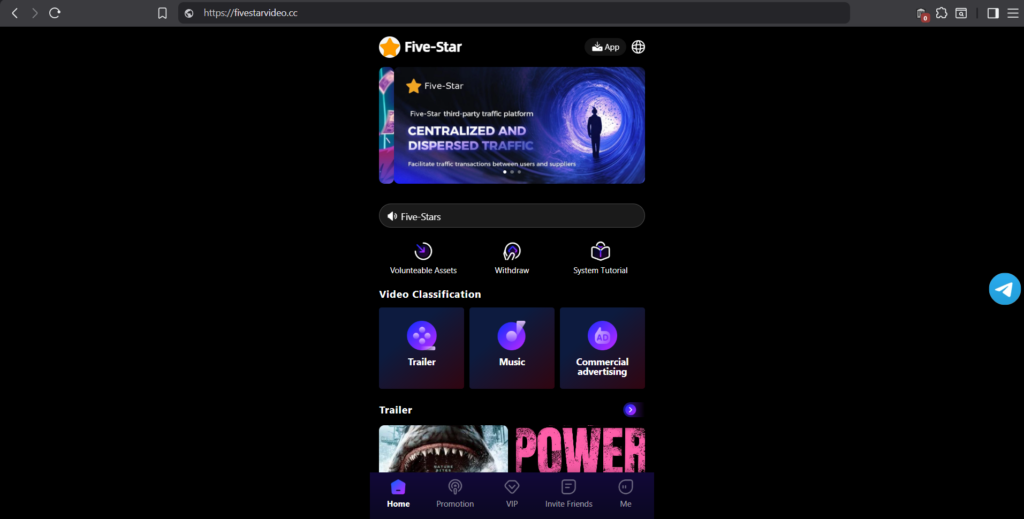
Based on my investigation, fivestarvideo.cc (often shown inside the app UI as “Five-Star” / “Five Stars”) is presented as a revenue platform tied to “video classification” and “traffic/advertising”-style activity, but the actual money-making structure is driven by VIP “star packages” that promise fixed daily USDT income for 365 days, plus referral commissions for bringing in new deposits.
The combination of very high fixed daily returns + 365-day “packages” + multi-level deposit rebates + crypto-only deposits is the core pattern to understand before anything else.
Inside the platform, it looks like an app-style dashboard with sections such as Video Classification (examples: Trailer, Music, Commercial advertising), and buttons like Withdraw, System Tutorial, and a VIP area. The story being implied is:
However, the payout promises are not tied to verifiable ad revenue, real clients, real contracts, or a transparent business model. The income is presented as guaranteed daily USDT as long as the package is active.
You choose a package level and pay a fixed USDT amount. In return, the platform promises a fixed daily income for 365 days.
Here are the package promises shown:
Task refresh time: 15:00 Singapore time
Package validity: 365 days
The platform also pushes “team” earnings via deposit/recharge rebates:
This is presented as earning when your invites register or deposit/recharge.
The “how to recharge” instructions describe sending crypto to an address (you copy an address and transfer from an exchange). Supported networks mentioned include combinations like TRC20, BEP20, and some token/network pairings.
The “how to withdraw” instructions claim:
Below are the main claims the platform makes, and why each claim is a red flag when compared to how legitimate businesses work.
Example: 7 USDT → 1 USDT/day, or 50,000 USDT → 20,000 USDT/day.
Why this is a red flag
What usually happens in scams with this structure
Why this is a red flag
Why this is a red flag
Red flag inside the claim itself
Why this is a red flag
Why this is a red flag
Why this is a red flag
A legitimate platform that pays users (whether it’s work, ads, or investment) usually has:
A platform like fivestarvideo.cc, based on my investigation, shows the opposite signals:
Independent web risk scanners have flagged fivestarvideo.cc as high-risk/low-trust and very new, which aligns with how these “VIP package” sites often operate. (Gridinsoft LLC)
(Also note: there is a separate, legitimate-looking brand on a different domain fivestar.video that appears unrelated to this “VIP USDT package” model—domain similarity can be used to confuse people.) (fivestar.video)
If you or someone you know is already inside:
Scam.
The promised returns are structurally unrealistic, the income model is deposit-driven (packages + team rebates), and the crypto deposit/withdraw flow combined with “guaranteed daily USDT” fits the typical pattern of a Ponzi-style investment/task payout trap rather than a legitimate revenue platform. (Gridinsoft LLC)
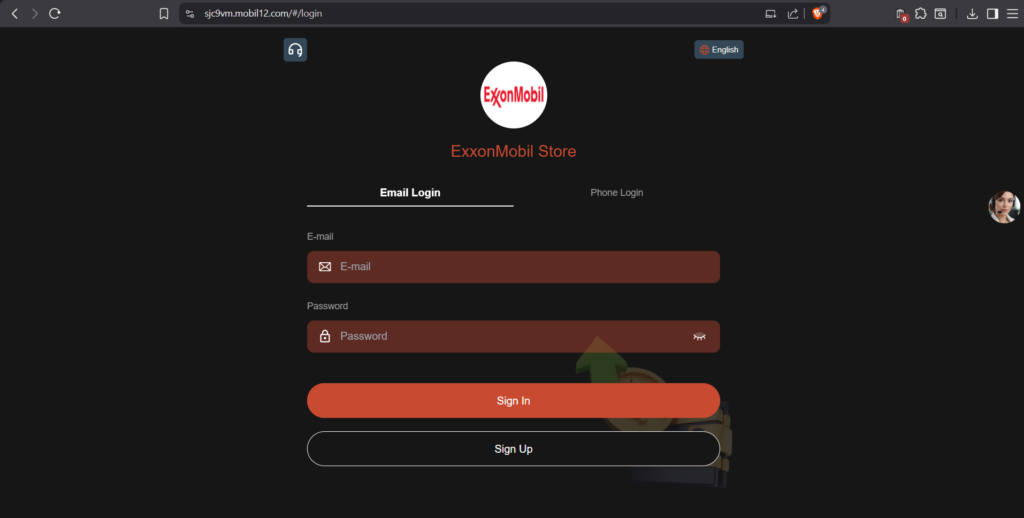
Domain reviewed: https://sjc9vm.mobil12.com/ (subdomain) and www.mobil12.com
Name used by the platform: “ExxonMobil Store”
Support channel shown: Telegram @ExxonMobil88
Based on my investigation, this “ExxonMobil Store” is not a real ExxonMobil-run ecommerce or marketing program.
It matches the classic USDT task-order / VIP package pattern where users deposit crypto, click “virtual orders” to generate “income,” and are pushed to recruit others through multi-level commissions.
The earnings claims are mathematically extreme and structurally depend on new deposits, which is why these platforms commonly end in blocked withdrawals and sudden shutdowns.
The site presents itself as a “blockchain e-commerce platform” that allegedly helps Apple’s online store boost product visibility by creating virtual orders. You do not receive any note, product, or proof of real sales. Instead, you:
They also use the ExxonMobil brand name and show “regulatory authority” logos to look legitimate, while directing users to Telegram for support (a huge red flag for “investment” operations).
For context: a real, legitimate merch store associated with ExxonMobil branding exists on a different domain (not mobil12.com). (exxonmobilstore.com)
They publish fixed VIP packages where a deposit unlocks a fixed daily profit, for 30 days, then “refund” rules apply.
Examples from the VIP table:
Tasks are described as “virtual orders” assigned by an “algorithm,” and you must complete them daily to claim income. Failure can lead to “no benefits” or account restrictions.
They pay commissions when recruits deposit:
They even advertise bonus rewards like inviting specific VIP levels daily for extra USDT.
Below are the key claims the platform makes, and the red flags inside each claim.
Red flags:
Legit vs scam comparison:
Legit custodians clearly disclose the regulated entity, the custodian bank, the jurisdiction, and the exact custody structure. Scam platforms use “bank monitored” as a comfort line without anything you can verify.
Red flags:
Legit vs scam comparison:
Legit affiliate marketing pays commissions from real tracked sales through official platforms, with transparent terms, and you earn a percentage of actual purchases. Here, “orders” are internal screen actions that can be simulated.
Red flags:
Legit vs scam comparison:
Real investments never promise fixed daily profits at these levels. Even very high-risk trading cannot guarantee daily returns, and regulated providers avoid “guaranteed” language.
Red flags:
Red flags:
Legit vs scam comparison:
Licensed firms provide a registration number you can verify directly on the regulator’s register, and the legal entity name matches exactly.
They point to a Companies House link and also list a company name and number.
Red flags:
Legit vs scam comparison:
A legitimate company citation links to the correct legal entity record, and the website domain is normally connected to that organization through official channels.
Red flags:
Legit vs scam comparison:
Legit refund terms are specific, enforceable, and tied to consumer protection law or regulated processes. Here it’s discretionary.
Red flags:
Legit vs scam comparison:
Legit referral programs exist, but they are secondary, limited, and not the main engine of returns. When recruiting is the “fastest way,” it’s usually because new deposits fund payouts.
When you combine:
…the pattern is consistent with a deposit-based payout scheme that depends on continuous inflow of new money.
Based on my investigation, sjc9vm.mobil12.com / mobil12.com (“ExxonMobil Store”) is a scam, specifically matching the common USDT VIP task-order model that uses a famous brand name, fake legitimacy signals, and unrealistic fixed returns to collect deposits and drive recruitment.
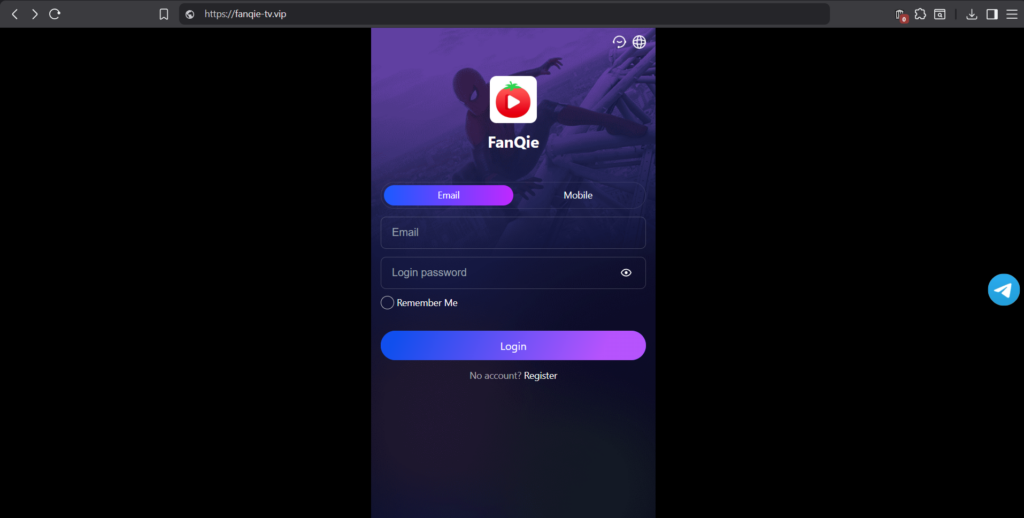
Website reviewed: https://fanqie-tv.vip
Also promoted inside the system: fanqie-tv.net (registration), Telegram “customer service” and Telegram “official channel”
FanQie TV presents itself as a “revenue platform” where users deposit USDT to unlock VIP packages that allegedly generate fixed daily income for 365 days.
At first glance, the interface looks clean and professional: dashboards, VIP tiers, withdrawal pages, and team commission summaries. But a clean interface does not equal a real business.
In my investigation, the entire earning structure revolves around deposits, upgrades, and recruitment—not around a verifiable product or service capable of producing the promised returns.
FanQie TV markets itself as a platform where members can earn daily income by completing tasks after purchasing VIP packages. However, no clear explanation is given about what tasks actually generate revenue, who pays for those tasks, or how the platform sustains payouts over an entire year.
Instead of business transparency, the platform focuses on:
The platform offers multiple VIP tiers, each requiring a USDT deposit and promising guaranteed daily income:
In my investigation, these numbers alone already invalidate the model. No legitimate business can sustainably pay out fixed daily profits at this scale without an external, verifiable revenue source.
FanQie TV offers a 15% total team rebate split across three levels:
These commissions are calculated not from product sales, but from other people’s deposits (“recharge”).
That distinction matters. When commissions are paid from deposits rather than real sales, the system becomes recruitment-dependent, not business-dependent.
Deposits are made via USDT on specific blockchain networks. Users are warned to select the correct chain to avoid permanent loss.
In my investigation, this setup is common in high-risk schemes because:
Legitimate investments fluctuate. FanQie TV claims fixed daily income regardless of market conditions, which contradicts basic economics.
Recovering 100% of capital in 1–4 days and then continuing to earn for a year is mathematically unsustainable unless new deposits continuously enter the system.
In my investigation, the platform explicitly teaches users to increase income by:
This is not business growth—it is deposit expansion.
Commissions are paid when someone recharges, not when a real product is sold. This is a defining characteristic of Ponzi-style and pyramid-style schemes.
The platform explains delayed withdrawals using generic reasons like processing time, system load, or operational factors. This language is commonly used when platforms begin controlling or slowing payouts.
FanQie TV promotes different domains (e.g., .vip and .net).
In my investigation, domain switching is often used when platforms:
There is no publicly verifiable company registration, audited financials, executive team, or third-party partnerships that explain where the money comes from.
Legitimate earning platforms usually have:
FanQie TV shows:
In my investigation, FanQie TV’s payout logic only works if:
Once deposits slow down, the model collapses. Early users may receive payouts to build confidence, but later users are left exposed when withdrawals are delayed, limited, or disabled.
This is not a sustainable business model. It is a redistribution system, where money flows from newer participants to earlier ones until the platform fails.
Based on the structure, income promises, referral mechanics, and lack of a real revenue source, fanqie-tv.vip strongly exhibits the characteristics of a Ponzi-style scam.
It does not meet the standards of a legitimate earning or investment platform.
If you are considering joining: do not deposit.
If you are already inside: avoid adding more funds and prioritize withdrawing what you can.
If someone invited you: understand that any “profit” comes from other people’s deposits—not from real business activity.
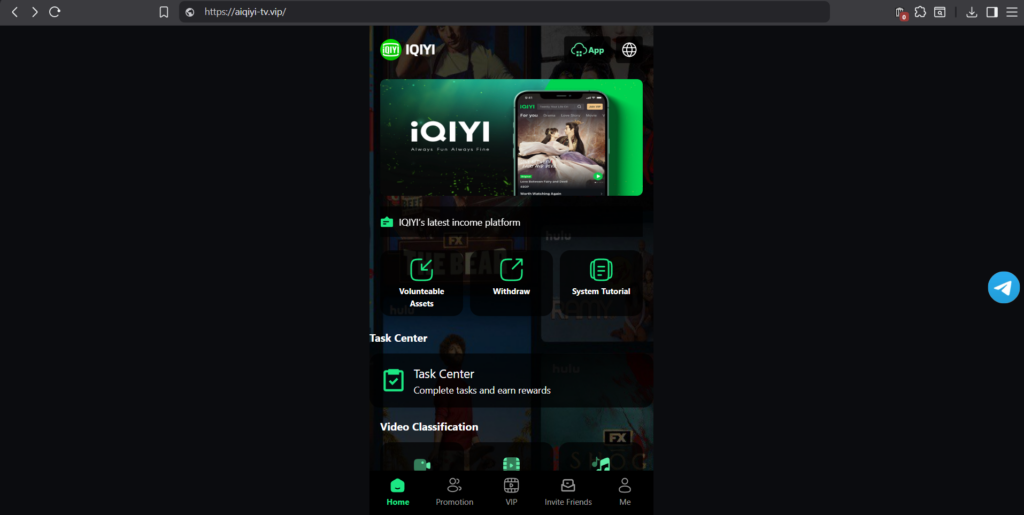
Platform name used: “IQIYI’s latest income platform”
Domains involved:
Claimed association: iQIYI
Payment method: USDT (cryptocurrency)
The website aiqiyi-tv.vip presents itself as an “income platform” allegedly connected to iQIYI, a well-known Chinese video streaming service similar to Netflix.
According to the platform’s own description, users can earn daily USDT income by purchasing “star packages.” These packages are marketed as VIP or income-generating tiers that supposedly produce fixed daily profits for 365 days.
At first glance, the branding and name are clearly designed to borrow trust from the real iQIYI brand. However, there is no verifiable proof that this platform is owned, operated, licensed, or endorsed by the real iQIYI company.
The platform claims users earn money through package purchases, not through streaming, ads, content creation, or any real business activity.
| Star Package | Price (USDT) | Claimed Daily Income |
|---|---|---|
| 1-Star | 10 | 2 |
| 2-Star | 50 | 10 |
| 3-Star | 160 | 33 |
| 4-Star | 320 | 69 |
| 5-Star | 600 | 139 |
| 6-Star | 1,500 | 375 |
| 7-Star | 3,500 | 950 |
| 8-Star | 10,000 | 3,030 |
| 9-Star | 30,000 | 10,699 |
| 10-Star | 50,000 | 25,000 |
Package validity: 365 days
Task refresh time: 12:00 Hong Kong time
There is no explanation of real revenue sources. No ads, no content licensing, no subscription fees, no advertisers, no streaming operations—only “tasks” and daily profit numbers.
The platform also offers multi-level referral rewards, officially called “team recharge rebates”:
This means users earn additional money when people they recruit deposit USDT.
This structure strongly incentivizes recruitment, not product usage.
This is not how a legitimate streaming company operates.
Using the name “IQIYI” creates false credibility.
There is no public confirmation from the real iQIYI that this platform exists.
This is a classic brand-hijacking tactic used by scams.
Claimed returns like:
These numbers are financially impossible in any legal business.
A 25,000 USDT daily return equals 912% per month. No legitimate company can sustain this.
There is no explanation of:
If money only comes from new deposits, the system collapses once deposits slow down.
USDT is:
Legitimate companies accept credit cards, app store payments, or regulated processors, not direct wallet transfers.
Telegram is not a customer support platform for multinational companies.
Scam operations rely on Telegram because:
The “team recharge rebate” system rewards recruitment.
This shifts the focus from any product or service to bringing in new depositors, a core characteristic of Ponzi-style schemes.
The platform appears across:
Scam platforms often rotate domains to:
The “task refresh at 12:00 Hong Kong time” is a scripted payout mechanic, not a real business operation.
This is typical of investment dashboards, not content platforms.
When analyzed as a whole, aiqiyi-tv.vip shows every core indicator of a crypto investment scam:
The platform does not generate value. It only redistributes funds from newer users to earlier users until withdrawals exceed deposits—at which point the site typically:
aiqiyi-tv.vip is NOT affiliated with the real iQIYI.
It is not an income platform and not a legitimate investment.
This platform is a high-risk crypto Ponzi scheme using the iQIYI name to mislead users.
Anyone depositing USDT is exposed to total loss once the platform collapses.
If a platform claims:
Then it is not an opportunity—it is a trap.
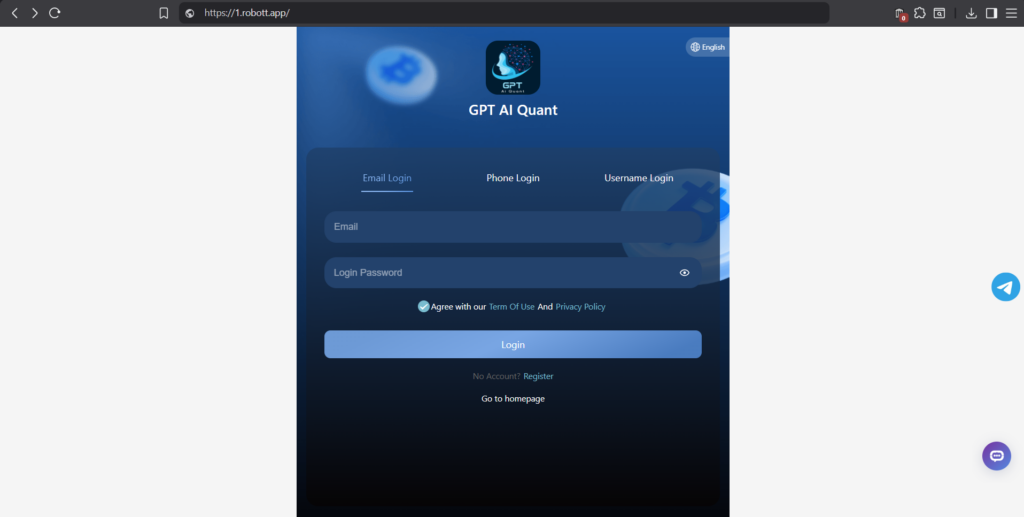
Reviewed domain: https://1.robott.app/
Platform name: GPT AI Quant (also branded as AI Quant / Robott)
GPT AI Quant is a crypto-based online platform that claims to generate income through AI-powered quantitative trading and arbitrage strategies.
The platform presents itself as an advanced system that allegedly connects to major crypto exchanges and performs automated trades using artificial intelligence.
Users are encouraged to deposit cryptocurrency—primarily USDT via TRC20 or BEP20 networks—into the platform. Once deposited, the system claims it can generate daily income through “quantitative tasks” that users can complete inside the app.
The platform heavily markets the idea of stable, consistent returns, fast withdrawals, and long-term operation, while positioning itself as both an investment tool and a referral-based income system.
Users choose a VIP-level contract by depositing crypto into the platform. Each VIP level claims to provide a fixed daily income rate.
The system states that:
Higher VIP levels require larger deposits and promise significantly higher daily income.
GPT AI Quant offers a three-level referral commission system, where commissions are based on other users’ deposits, not on real product sales.
Example shown by the platform:
If someone you invite deposits 1,000 USDT, you instantly receive 150 USDT.
The platform also promotes team-building incentives:
These rewards are framed as “broker” or “agent” promotions and are entirely dependent on total team deposits.
According to GPT AI Quant’s own FAQ:
All transactions are claimed to be fully automated, with no manual review.
GPT AI Quant explicitly claims the following:
Each of these claims is critical to evaluating whether the platform is legitimate.
Legitimate quantitative trading firms:
GPT AI Quant provides no verifiable proof of:
The platform only displays internal numbers on its own dashboard.
True arbitrage trading:
If GPT AI Quant truly had profitable arbitrage technology, there would be no reason to:
Crypto markets are volatile.
No AI, no algorithm, and no arbitrage system can legally or realistically guarantee stable daily profit.
Fixed daily income is a classic indicator of fabricated returns, not real trading.
Using exchange logos or names does not mean real integration.
A legitimate platform would show:
GPT AI Quant requires users to send funds directly to the platform, surrendering control.
Earning money based on other people’s deposits rather than real trading profits is a critical warning sign.
The largest and fastest earnings in GPT AI Quant come from:
This structure financially rewards expansion, not trading success.
These features lower skepticism and increase participation.
Legitimate trading platforms:
GPT AI Quant model:
GPT AI Quant (https://1.robott.app/) is a SCAM.
The platform does not operate as a real AI trading or arbitrage system. Its core structure is based on VIP deposits, fixed daily income promises, and multi-level referral commissions tied directly to deposits. There is no verifiable evidence of genuine trading activity, real exchange integration, or sustainable profit generation.
The income shown to users is not produced by AI trading. It is structurally dependent on new deposits entering the system. Once deposit inflow slows, withdrawals fail and the platform collapses—a pattern repeatedly seen in similar schemes.
This is not an investment platform.
This is not AI trading.
This is a deposit-driven scheme designed to transfer money from later users to earlier participants and promoters.
Avoid it completely.
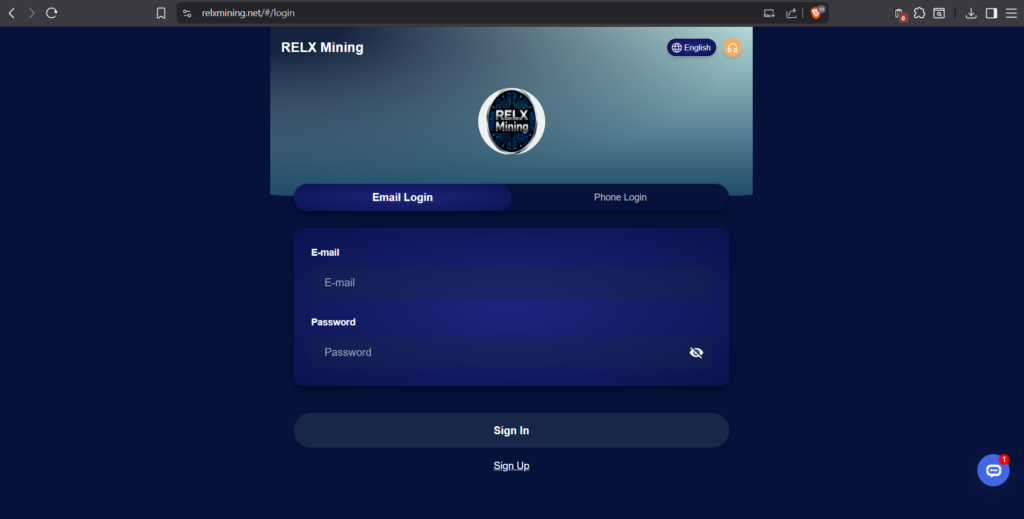
Domain reviewed: relxmining.net
RELXMining.net presents itself as a global cloud mining platform offering daily income, fixed returns, and team-based rewards through cryptocurrency investments. It claims to be backed by a long-established UK company and promotes itself as an environmentally friendly, technologically advanced mining operation.
However, once the platform is examined closely—looking at its earning structure, incentive system, company claims, and operational logic—serious inconsistencies begin to emerge.
This review breaks down what RELXMining.net claims, how users are expected to earn, and whether those claims align with how legitimate cryptocurrency mining actually works.
Relxmining.net claims to operate as a cloud cryptocurrency mining platform, allowing users to earn passive income by purchasing mining contracts rather than running physical mining equipment themselves.
According to the platform’s public information, RELX Mining states that it:
The platform markets itself as suitable for both beginners and experienced miners, emphasizing ease of use, daily income, and “safe” returns.
At face value, these claims appear impressive. The real issue is whether the business model supports them.
The platform outlines three main income methods.
Users are instructed to choose one or more mining “projects” and invest USDT into time-based contracts. Each contract allegedly:
Each project is presented with a fixed rate of return and a fixed duration, creating the impression of predictable, low-risk profits.
The platform offers a three-level referral system based on deposits:
Commissions are earned when invited users recharge or deposit funds, not when actual mining output is generated.
Relxmining.net further incentivizes recruitment through team deposit milestones:
This shifts the earning focus from mining performance to how much money a team deposits.
Claim: Users receive daily income, and the original investment is returned at contract expiry.
Reality:
Real cryptocurrency mining cannot guarantee daily profits or principal protection. Mining profitability depends on:
Any platform promising fixed daily income with guaranteed capital return is not describing real mining economics.
Legitimate cloud mining platforms sell hashrate (TH/s) and disclose:
Relxmining.net instead offers predefined ROI percentages, which is characteristic of investment-style schemes, not mining operations.
Referral rewards and team bonuses are triggered by recharge amounts, not by verifiable mining performance.
This means the system’s sustainability depends on new money entering the platform, not on actual mining revenue.
A platform claiming to pay a daily salary based on team deposits is operating a compensation structure, not a mining business.
Legitimate mining companies do not pay salaries to users for recruiting investors.
Relxmining.net cites a UK company number and London address associated with a real UK-registered entity. However:
A real registration does not grant permission for an unrelated online platform to solicit crypto investments.
Despite claiming decades of history, the platform’s online footprint, structure, and user-acquisition methods resemble newly launched investment websites, not legacy mining infrastructure operators.
Long-standing mining firms typically have:
Relxmining.net provides none of this verifiable continuity.
Real mining platforms:
Mining is a probability-based operation, not a fixed-income product.
Fraudulent platforms often:
Relxmining.net aligns far more closely with this second category.
Conclusion:
Based on its earning structure, referral-heavy incentives, guaranteed returns, recruitment-based rewards, and inconsistent company claims, relxmining.net should be considered a scam or, at minimum, an extremely high-risk Ponzi-style operation.
The platform does not operate like legitimate cloud mining. Its sustainability appears dependent on continuous inflow of new user deposits, not real cryptocurrency mining revenue.
Anyone considering depositing funds should understand that when recruitment slows, platforms structured like this historically stop paying—and disappear.
Website: https://ais9.ph/

In recent months, platforms branded as “AI intelligent quantitative investment systems” have flooded social media and private groups, promising daily passive income, automated AI trading, and rebate rewards. One of the newest names appearing in this space is AIS9.
This review breaks down exactly what AIS9 is, how it claims users earn, and most importantly, whether it is legit or a scam, based on the platform’s own materials.
AIS9 presents itself as an “Intelligent Quantitative Investment Official Platform” that claims to use an AI automated trading system to generate daily PHP earnings for users.
According to its own announcements and dashboard materials, AIS9 promotes itself as:
However, no real trading infrastructure, broker integration, or regulated exchange connection is shown anywhere in the platform materials.
AIS9 does not present itself as a traditional investment company. Instead, it uses account levels, stored value balances, and invitation rebates, which already puts it outside the structure of legitimate financial services.
Based strictly on the screenshots inside the platform, there are three main earning mechanisms.
Users are required to recharge (deposit) funds into the platform. This deposited amount is referred to as “stored value”.
Key points from the platform:
This is not trading. There is no evidence of:
It is a fixed daily return model, which is already a major warning sign.
AIS9 uses a VIP tier system:
Each VIP tier:
There is no performance-based variability shown. Income appears guaranteed by level, not by market conditions.
AIS9 heavily promotes invitation rewards, structured as follows:
This means:
This is a classic multi-level referral payout structure, not a simple affiliate program.
Nowhere in the platform materials is there:
The only visible source of money is:
This is critical.
To be clear, the following are not confirmations of legitimacy, only perceived advantages users might believe:
These are marketing conveniences, not proof of legitimacy.
This section is critical.
Real trading cannot guarantee daily profits.
Markets fluctuate.
Losses exist.
AIS9 shows only income, never losses.
This alone disqualifies it as legitimate trading.
Your earnings are tied to:
Not tied to:
This is not investing. It is capital recycling.
Three-level commission structures are hallmarks of Ponzi-style platforms, especially when combined with fixed returns.
Legitimate platforms do not pay 15% + 3% + 1% from user deposits.
The word “AI” is used repeatedly, but:
“AI” here functions as a marketing label, not a system.
The platform explicitly states:
“The stored value amount is used to open the corresponding level and obtain the daily income ratio of that level.”
This means:
This is a simulation, not trading.
If payouts depend on:
Then the system cannot survive once new money slows.
This is the defining structure of a Ponzi scheme.
AIS9 is a SCAM.
Not “high risk.”
Not “grey area.”
Not “needs more data.”
Based on its own materials, AIS9 matches every major characteristic of a Ponzi-style investment scheme:
The “AI trading” narrative is pure branding, not functionality.
Platforms like AIS9 often:
If you are already inside:
If you are considering joining:
Walk away.
There is no legitimate AI trading platform that works like this.

Reviewed Domain: riscoinz3.com, riscoima.com, riscoimb.com, riscoimc.com, riscmmcfs.com, pcchain.wxpass.net, xchain.wxtome.link, riscoin.io, riscoin.trade, riscoinex.com, riscoin.net, seagullalliance.io, leagueofseagull.com, seagull-network.com, riscoin-global.com, riscoin-exchange.com, riscoinx.com, riscoinportal.com, riscoinplus.com, riscoinpro.com, riscoinhq.com, riscoinapp.com, leagueofseagullalliance.com, seagullalliance.org, seagullalliance.net, seagullalliance.club, theleagueofseagull.com, seagullalliance.online
Riscoin presents itself as a crypto trading platform that claims to offer futures and perpetual trading with guaranteed or consistent daily profits. It is commonly promoted through private messages, group chats, and referral-based communities.
Many people have been asking a simple but critical question:
“Is Riscoin legit, or is it a scam?”
To answer that properly, this review does not rely on opinions, hype, or screenshots of profits. Instead, it is based on technical analysis of the platform’s code, structure, and trading mechanics.
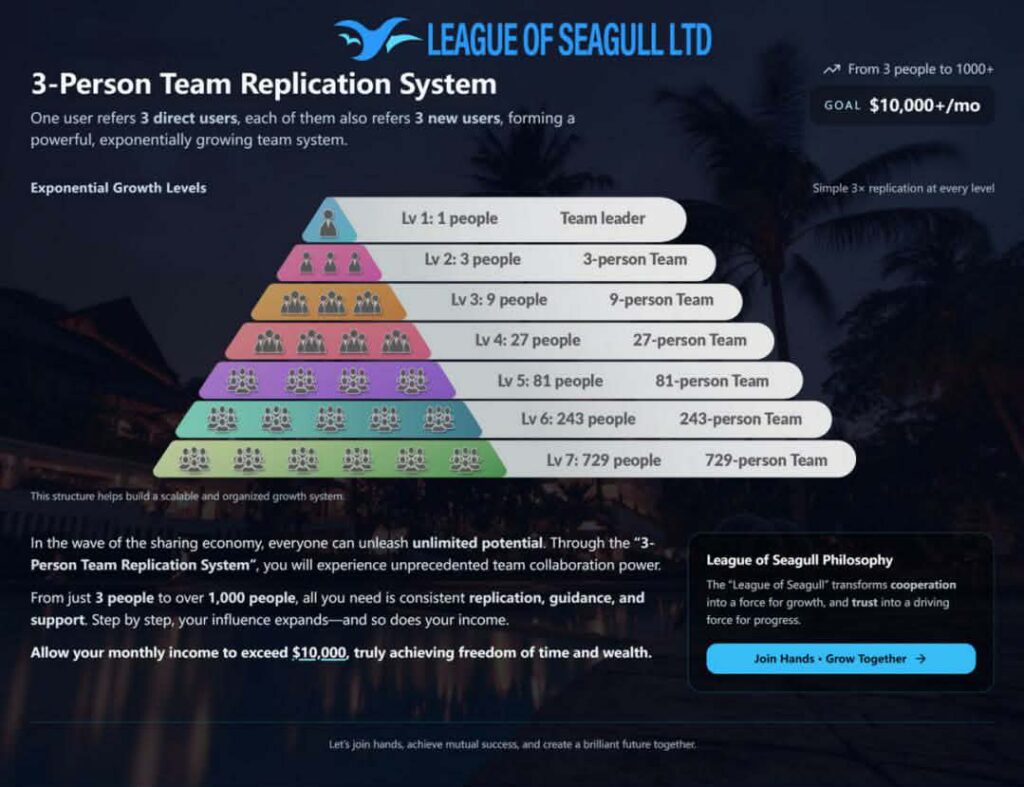
The League of Seagull Alliance is presented as a community or group associated with Riscoin. In practice, it functions as a recruitment and coordination network where:
This alliance is not an independent regulatory body, trading firm, or licensed organization. It operates as a promotion and distribution layer for Riscoin.
According to its promotion and internal mechanics, users earn by:
Additionally, users are incentivized to:
At first glance, this may look like automated or copy trading. However, the actual mechanics tell a very different story.
One of the most important findings is the “Invited Me” or code-based trading system.
Inside the futures section of Riscoin, users are required to:
This is not a normal feature of legitimate copy trading.
This means:
This strongly indicates that profits are not coming from the real market, but from an internal ledger controlled by the platform.
The second major issue is the presence of fixed-time or “submit by time” orders.
In legitimate crypto futures trading, there are two main types:
Perpetual futures (used by Binance, OKX, Bybit, etc.) allow positions to stay open indefinitely as long as margin exists.
However, Riscoin uses:
Example:
This structure alone already disqualifies Riscoin as a legitimate trading platform.
During code analysis, multiple API base domains were found instead of a single stable infrastructure.
This pattern is common in platforms that:
This is not how regulated exchanges operate.
Riscoin uses websocket connections to display price data.
However:
Price data can be:
What matters in a real exchange is:
None of these critical proofs are transparently available.
Riscoin allows users to earn from:
In legitimate exchanges:
In Riscoin:
This strongly suggests that new user money, not trading profits, is the primary source of payouts.
The code shows support for:
This “everything-in-one” structure is typical of white-label exchange templates that are:
Legitimate exchanges develop products gradually, with:
Riscoin does not meet these standards.
In a legitimate platform:
In Riscoin:
This means users do not truly control their funds.
Based on:
Riscoin is not a legitimate crypto trading platform.
It operates as a fake or simulated trading system, most likely white-label, where:
This fits the definition of a scam trading platform, not an investment or exchange.
This platform should be avoided.
It is especially dangerous to:
Because doing so spreads financial harm.