

Table of Contents
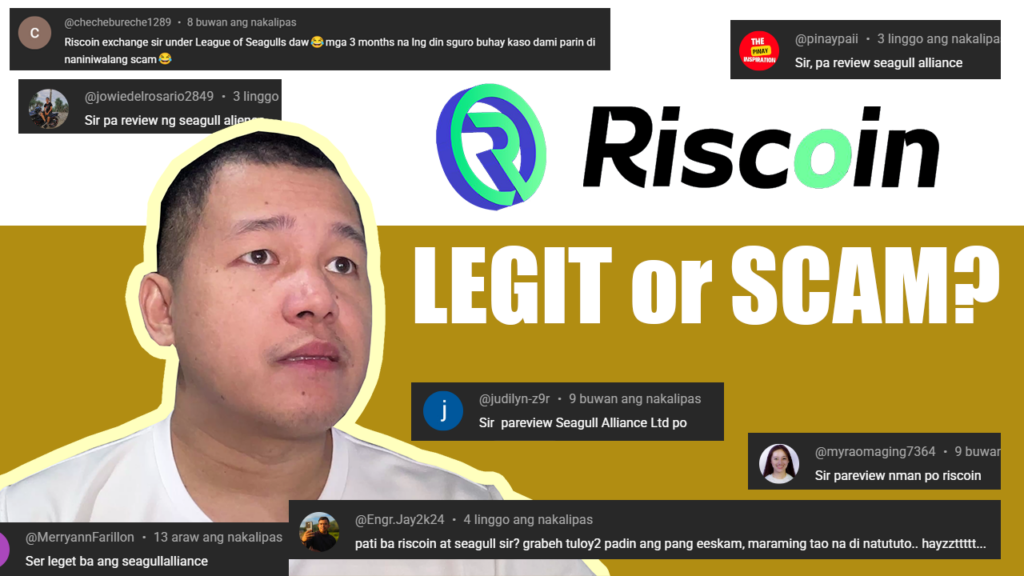
Reviewed Domain: riscoinz3.com, riscoima.com, riscoimb.com, riscoimc.com, riscmmcfs.com, pcchain.wxpass.net, xchain.wxtome.link, riscoin.io, riscoin.trade, riscoinex.com, riscoin.net, seagullalliance.io, leagueofseagull.com, seagull-network.com, riscoin-global.com, riscoin-exchange.com, riscoinx.com, riscoinportal.com, riscoinplus.com, riscoinpro.com, riscoinhq.com, riscoinapp.com, leagueofseagullalliance.com, seagullalliance.org, seagullalliance.net, seagullalliance.club, theleagueofseagull.com, seagullalliance.online
What Is Riscoin?
Riscoin presents itself as a crypto trading platform that claims to offer futures and perpetual trading with guaranteed or consistent daily profits. It is commonly promoted through private messages, group chats, and referral-based communities.
Many people have been asking a simple but critical question:
“Is Riscoin legit, or is it a scam?”
To answer that properly, this review does not rely on opinions, hype, or screenshots of profits. Instead, it is based on technical analysis of the platform’s code, structure, and trading mechanics.
What Is the League of Seagull Alliance?
The League of Seagull Alliance is presented as a community or group associated with Riscoin. In practice, it functions as a recruitment and coordination network where:
- Members receive daily “signals”
- Codes are distributed for trading
- Users are encouraged to invite others
- Team levels, rewards, and commissions are emphasized
This alliance is not an independent regulatory body, trading firm, or licensed organization. It operates as a promotion and distribution layer for Riscoin.
How Does Riscoin Claim Users Make Money?
According to its promotion and internal mechanics, users earn by:
- Entering a daily trading code inside the platform
- “Following” an order released by admins or managers
- Waiting for a fixed-time result (win or loss)
- Receiving profits shown inside the dashboard
Additionally, users are incentivized to:
- Recruit others
- Build teams
- Earn multi-level rewards, rebates, and commissions
At first glance, this may look like automated or copy trading. However, the actual mechanics tell a very different story.
Built-In “Invited Me” Code System (Major Red Flag)
One of the most important findings is the “Invited Me” or code-based trading system.
Inside the futures section of Riscoin, users are required to:
- Enter a secret code
- Confirm the order
- Follow the trade released by the platform or admins
This is not a normal feature of legitimate copy trading.
Why this is a red flag:
- In real copy trading, you follow real traders, not secret codes
- Legit platforms show:
- Public trader profiles
- Trading history
- Risk metrics
- Drawdowns and performance
- Riscoin replaces all of that with a code controlled by the platform
This means:
- Users do not choose entries or exits
- Users do not see real traders
- The system decides outcomes internally
This strongly indicates that profits are not coming from the real market, but from an internal ledger controlled by the platform.
Timed Orders and Binary-Options-Style Mechanics
The second major issue is the presence of fixed-time or “submit by time” orders.
Why this matters:
In legitimate crypto futures trading, there are two main types:
- Traditional futures (with expiration dates, no funding rate)
- Perpetual futures (no expiration, with funding rate)
Perpetual futures (used by Binance, OKX, Bybit, etc.) allow positions to stay open indefinitely as long as margin exists.
However, Riscoin uses:
- Fixed-time settlement
- CALL / PUT-style outcomes
- Profits that do not scale with actual market movement
Example:
- Whether price moves 1% or 100%, the payout is fixed
- This is not futures trading
- This is binary options or timed betting
Why this is a red flag:
- Binary options are heavily restricted or banned in many countries
- Scam platforms prefer this system because:
- Outcomes are easy to simulate
- Results are easy to control
- Users can be psychologically pressured (“next round”, “done”, “confirm”)
This structure alone already disqualifies Riscoin as a legitimate trading platform.
Multiple Rotating API Domains (Disposable Infrastructure)
During code analysis, multiple API base domains were found instead of a single stable infrastructure.
Why this is suspicious:
- Legit exchanges may use multiple subdomains, but:
- The main domain remains consistent
- Branding and infrastructure are stable
- Riscoin uses replaceable-looking domains
This pattern is common in platforms that:
- Expect takedowns or reports
- Want to migrate quickly
- Run multiple clones of the same system
This is not how regulated exchanges operate.
Websocket Feeds Do Not Prove Real Trading
Riscoin uses websocket connections to display price data.
However:
- A price feed ≠ a trading engine
- A chart ≠ real execution
- A live candle ≠ market participation
Price data can be:
- Delayed
- Copied
- Simulated
- Manipulated
What matters in a real exchange is:
- Verified order execution
- Transparent settlement logic
- Blockchain transaction IDs (TXIDs) for withdrawals
None of these critical proofs are transparently available.
Referral System: Extra or Core?

Riscoin allows users to earn from:
- Direct referrals
- Indirect referrals
- Team levels (up to multiple layers)
- Rebates and rewards
Why this is a red flag:
In legitimate exchanges:
- Referral rewards come from trading fees
- Earnings are simple and limited
In Riscoin:
- Rewards scale by recruitment depth
- Earnings depend on new deposits
- Team structure resembles network-based payout
This strongly suggests that new user money, not trading profits, is the primary source of payouts.
White-Label Platform Indicators
The code shows support for:
- Borrowing / loans
- Mining
- Financial products
- Spot trading
- Perpetual trading
- Timed “second” trading
This “everything-in-one” structure is typical of white-label exchange templates that are:
- Purchased as bundles
- Rebranded
- Deployed quickly
- Used for short-lived operations
Legitimate exchanges develop products gradually, with:
- Public documentation
- Clear compliance
- Transparent risk disclosures
Riscoin does not meet these standards.
Do Users Really Control Their Money?
In a legitimate platform:
- Users place trades themselves
- Withdrawals produce blockchain TXIDs
- The platform cannot arbitrarily block funds
In Riscoin:
- Trades are admin/code-controlled
- Results are system-determined
- Withdrawals depend on platform approval
This means users do not truly control their funds.
Final Analysis: Scam or Legit?
Based on:
- Code-based trading control
- Binary-options-style mechanics
- Internal result determination
- Heavy recruitment incentives
- Disposable infrastructure
- Lack of real trader visibility
- Absence of verifiable execution and withdrawals
Conclusion:
Riscoin is not a legitimate crypto trading platform.
It operates as a fake or simulated trading system, most likely white-label, where:
- Trades are controlled internally
- Profits are not market-based
- User earnings depend on new participants
This fits the definition of a scam trading platform, not an investment or exchange.
Final Warning
This platform should be avoided.
It is especially dangerous to:
- Invest money
- Invite friends or family
- Promote it as trading or investment
Because doing so spreads financial harm.


Discussion (0)
Leave a comment
No comments yet. Be the first to share your thoughts!